
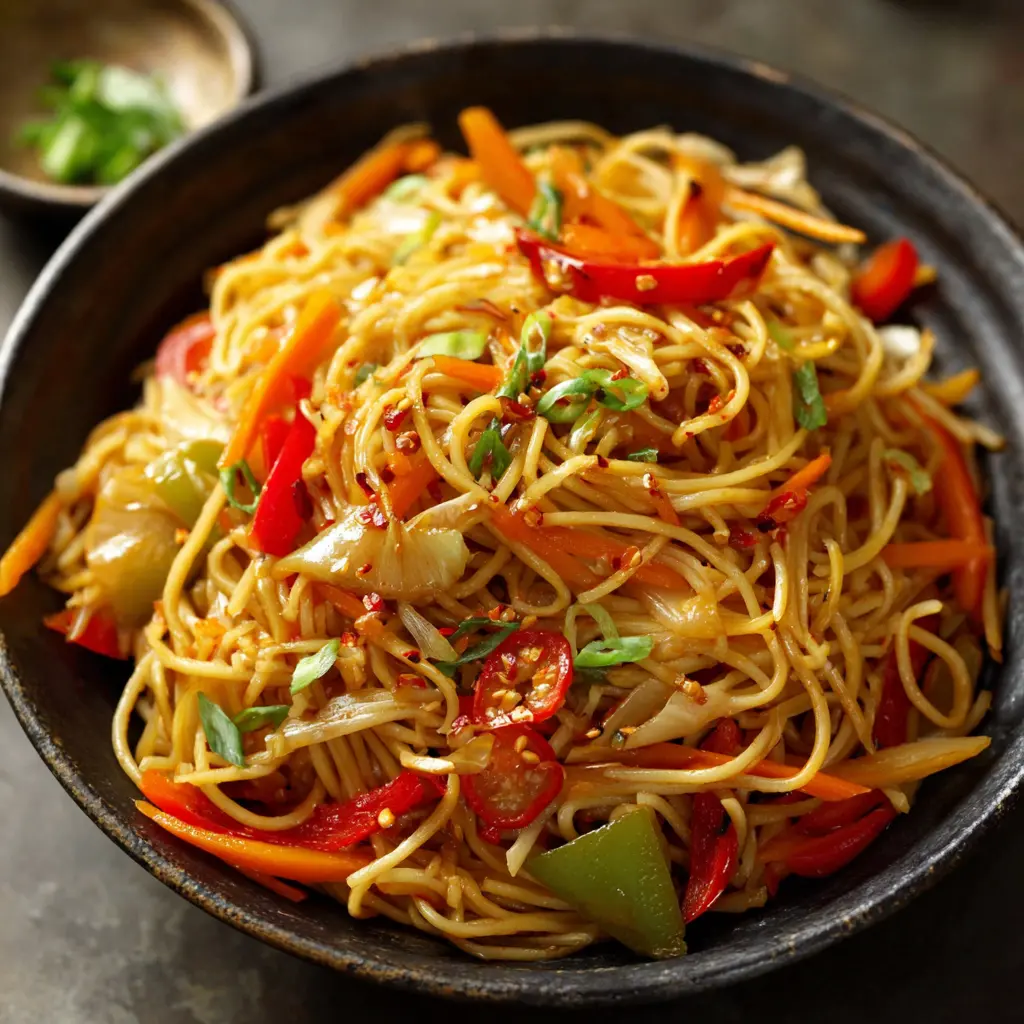
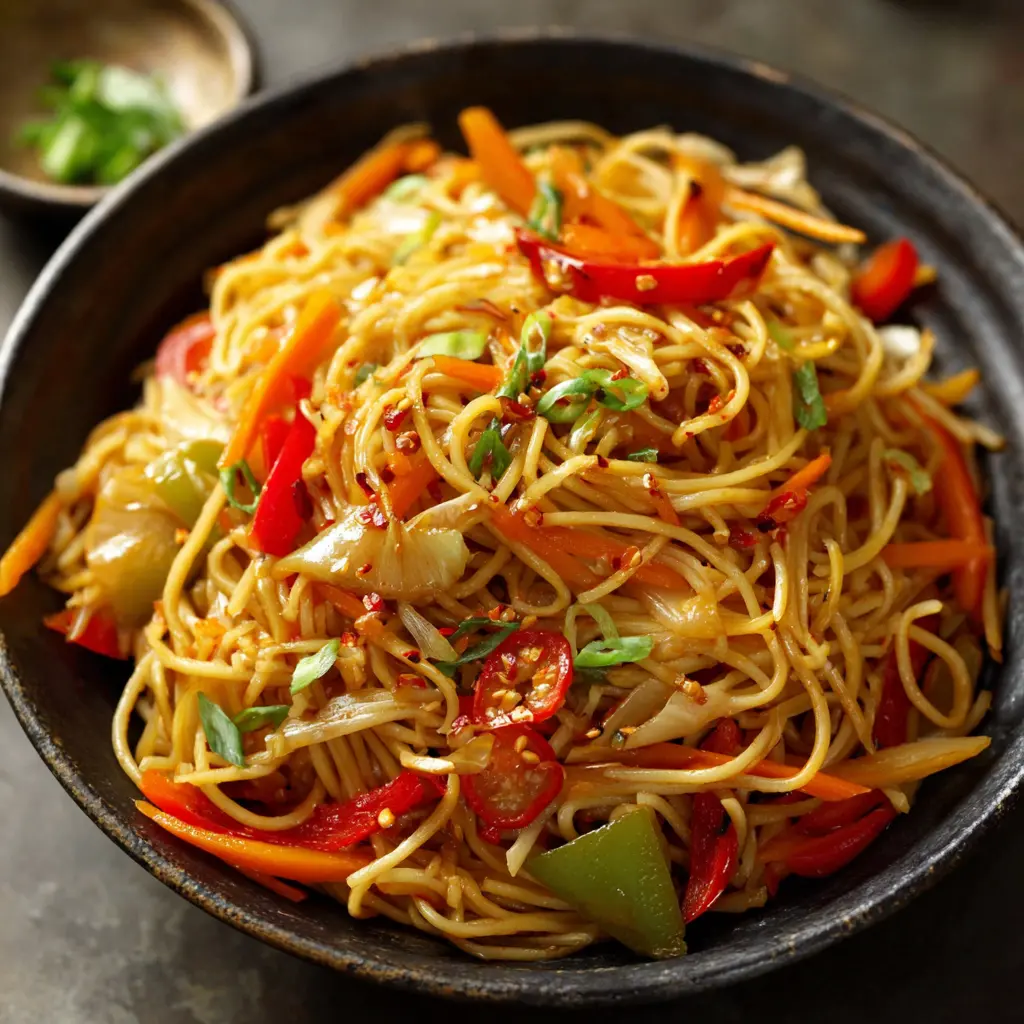
Healthy Spicy Garlic Noodle Stir Fry Vegetables
Ingredients
Method
- Boil approximately 500ml of water with 1 teaspoon of salt. Add noodles when the water boils. Boil for 10-12 minutes, or as per noodle variety. Drain the noodles, then gently toss them in a teaspoon of oil. Alternatively, cook noodles according to packet instructions.
- Slice the vegetables, ginger, and garlic. Set them aside.
- Heat sesame oil or cooking oil in a wok over high heat. Add ginger, garlic, and dry red chilies. Stir-fry for 1-2 minutes over high heat, ensuring not to burn the aromatics. Add the sliced onion and stir-fry for 1-2 minutes, or until translucent.
- Add the sliced vegetables and stir-fry for 2-3 minutes, or until al dente. Add white vinegar and mix thoroughly. Next, add soy sauce, salt, pepper, red chili flakes, and chili sauce. Stir-fry for 1-2 minutes.
- Next, add the boiled noodles and gently toss them with the vegetables, being careful not to break the noodles. Top with spring onion greens.
- Serve Chilli Garlic Noodles with Manchurian gravy for dinner.
Nutrition
Notes
- To avoid soggy vegetables in this dish, chop all vegetables very finely into juliennes. Vegetables that need a longer time to cook must be blanched separately before adding to the dish
- You can add any vegetables of choice to these garlic noodles. Carrots, bell peppers, onion, capsicum, cabbage, broccoli, mushrooms, or green leafy vegetables are perfect to stir fry with noodles. If you are not a big fan of veggies then only stick with onions.
- Ideal protein choices for this dish are firm tofu cubes, lean chicken cut into strips, shrimp or mushroom as all of them cook really quickly
- Be mindful when adding salt to this dish as all the sauces contain salt in them
- Do not forget to rinse the noodles with water to remove the stickiness after boiling.
- What you can use – Veg/Egg Hakka noodles, whole grain noodles, or any local variety of stir-fry noodles (thin crinkly looking noodles). Don’t buy thicker ones like udon noodles or extremely thin ones like rice or glass noodles (vermicelli).
- One must stress on quality because cheaper varieties usually turn out mushy or stick to each other. The texture is paramount in any kind of noodles recipe and you don’t want clumpy noodles ruining that for you.
Tried this recipe?
Let us know how it was!Why This Spicy Garlic Noodle Stir Fry Is Your New Weeknight Hero
You know that feeling. It’s Wednesday, maybe Thursday, and you’re staring into the fridge after a long day. You want something that feels like a treat, something vibrant and exciting, but you also need it to be on the table in, honestly, about 30 minutes. And you want it to actually be good for you. I’ve been there more times than I can count.
That’s exactly why this spicy garlic noodle stir fry vegetables recipe has become my absolute go-to. It’s the answer to that weeknight dinner panic. It’s a riot of color and flavor that comes together faster than you can decide on takeout. And the best part? It’s packed with so many vegetables, you’ll feel amazing after eating it. No heavy, sluggish feeling, just pure, spicy, garlicky satisfaction.
I love this recipe because it’s not fussy. It’s a template, a framework you can make your own with whatever veggies are hanging out in your crisper drawer or look good at the farmers’ market. Let’s make it together.
Choosing Your Weapons: Noodles, Veggies, and That All-Important Sauce
Before we fire up the wok, let’s talk ingredients. This is where you can really make the recipe yours. I’ll compare a couple of common approaches so you can pick what works for your kitchen.
First, the noodles. You’ve got options. I often use wide, flat rice noodles because they soak up the sauce so beautifully and have that perfect chewy texture. But you know what? A simple pack of ramen noodles (discard the seasoning packet) works incredibly well in a pinch. They cook super fast and have a great springiness. The tradeoff? Rice noodles can be a bit sticky, so you need to work quickly once they’re cooked. Ramen or udon noodles are a bit more forgiving for beginners. Honestly, whatever you have is fine.
Now, the vegetable party. This is my favorite part. You want a mix of textures and colors. I always include something crunchy that takes a minute to cook, like broccoli florets or snap peas. Then something softer and quicker, like sliced mushrooms or baby bok choy. And for sweetness and color, bell peppers are non-negotiable for me. A shredded carrot adds a nice pop too. The key is to chop everything roughly the same size so they cook evenly. Don’t overthink it.
The sauce is where the magic happens. It’s a simple mix, but the balance is everything. You’ve got your salty base (low-sodium soy sauce, please), your sweet note (a touch of brown sugar or maple syrup), your tang (rice vinegar), and of course, the stars: fresh garlic, fresh ginger, and your chosen heat.
Your Guide to Chili Pastes & Sauces
This trips a lot of people up, so let’s break it down. You’ve probably seen sriracha, sambal oelek, and chili garlic sauce all at Trader Joe’s or Ralphs and wondered what the difference is.
Sriracha is a smooth, garlic-forward chili sauce. It’s spicy, but also has a slight sweetness and tang. Sambal oelek is more straightforward. It’s basically just ground chilies, sometimes with a bit of vinegar. It’s pure, unadulterated heat. Chili garlic sauce is like a chunkier, more intense cousin to sriracha, with big pieces of garlic and chili.
For this spicy garlic noodle stir fry, I like to use a combination. Maybe a tablespoon of sriracha for that rounded flavor and a teaspoon of sambal for a cleaner heat kick. But here’s my biggest tip: start on the low end. You can always add more spice, but it’s really hard to take it away. The first bite might not seem that spicy, but it builds as you eat. Have a few bites before you decide to add more.
Your Game Plan for Stir Fry Success
Okay, let’s get cooking. The most important step happens before you even turn on the stove. It’s called *mise en place* it’s just a fancy way of saying get all your stuff ready. Chop all your veggies. Mix your sauce in a little bowl. Mince your garlic and ginger. Have your noodles cooked according to package directions and drained.
Why? Because once you start stir-frying, everything moves fast. You won’t have time to rummage for the soy sauce while your garlic is threatening to burn. I learned this the hard way with a batch of sadly bitter garlic. Not ideal.
Heat your wok or a large, heavy skillet over high heat. You want it seriously hot. Add a good, neutral oil with a high smoke point peanut oil is amazing here, but avocado or vegetable oil works too. Swirl it around.
Now, add your harder vegetables first. Think broccoli stems, carrots. Let them sizzle for a minute or two, getting a little color. Then toss in the quicker-cooking veggies like bell peppers and snap peas. The goal is crisp-tender. You want a bit of bite, not mush. Keep everything moving in the pan.
Push the veggies to the side, making a little well in the center. Add a bit more oil and throw in your garlic and ginger. The smell that hits you at this moment is just… amazing. It’s the soul of the dish. Let it sizzle for just 20-30 seconds until it’s fragrant but not brown.
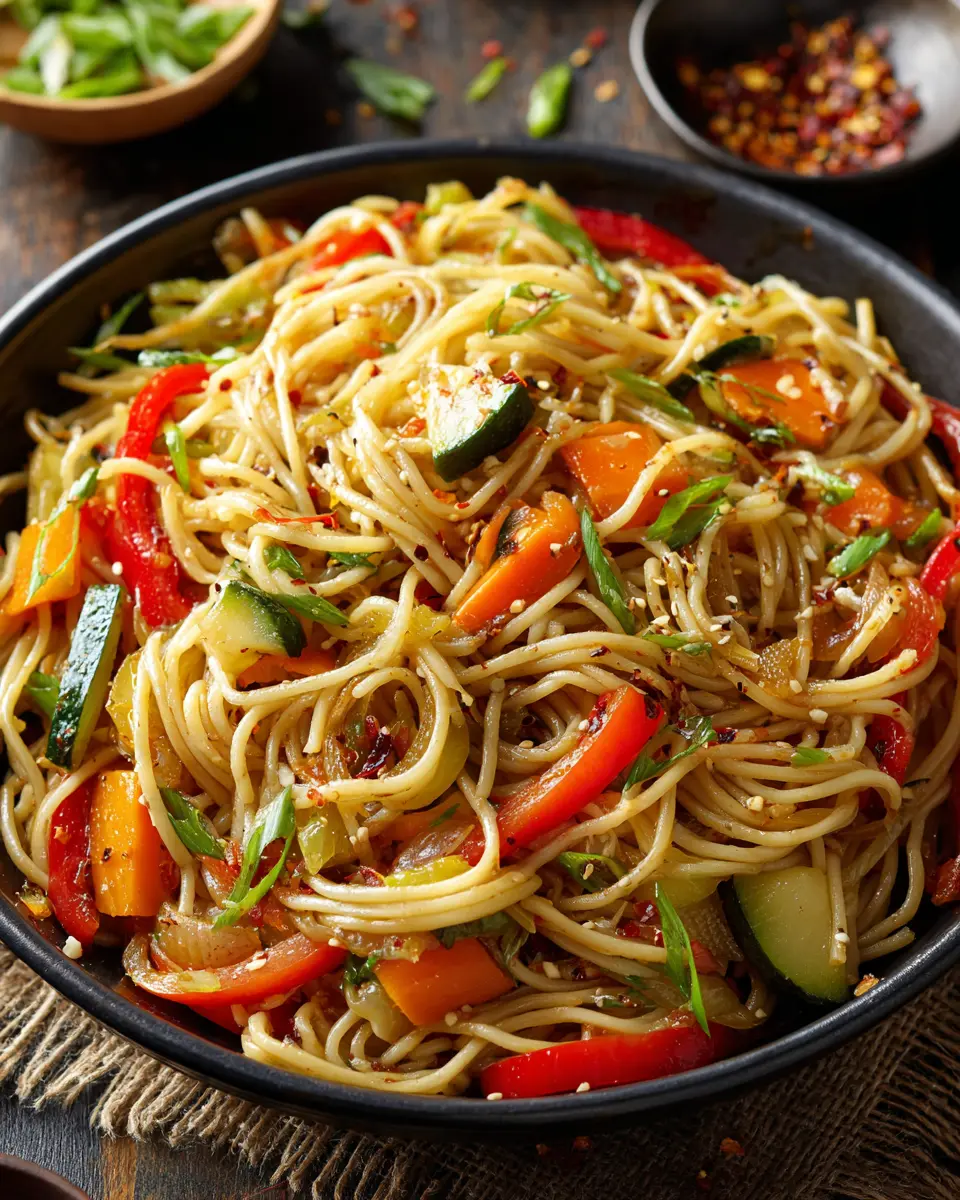
Now, the grand finale. Add your cooked noodles and pour that sauce you mixed earlier all over everything. Use a pair of tongs or two big forks and toss, toss, toss until every single noodle and vegetable piece is glistening and coated. It should only take a minute. If it looks a little dry, a splash of water or vegetable broth can loosen it up.
Navigating the Stir-Fry: Tips & Common Hiccups
Even with a simple recipe, little things can make a big difference. Let’s talk through some common bumps so you can avoid them.
Common Mistakes & Fixes
Mistake: Soggy, sad vegetables.
Solution: Don’t overcrowd the pan! Cook in batches if you have to. And add them in stages, hardest veggies first. You want high heat and quick cooking.
Mistake: A bland sauce.
Solution: Taste as you go! Did you use low-sodium soy sauce? If you used regular, you might have needed less. Balance is key if it’s just salty, add a tiny bit more sweetener or vinegar. If it’s flat, a pinch more ginger or garlic powder can help.
Mistake: Gummy, stuck-together noodles.
Solution: Rinse your cooked noodles under cold water after draining. This washes off excess starch. Also, toss them with a tiny bit of oil to prevent clumping while you prep everything else.
Mistake: Burning the garlic.
Solution: That hot pan is crucial, but garlic burns in a heartbeat. Add it last, just before the sauce, and keep it moving. Once it’s fragrant, you’ve got about 15 seconds before you need to add the next ingredient.
A couple more pro tips. It’s best to slightly undercook your noodles when boiling them. They’ll finish cooking in the hot pan with the sauce. And if you’re nervous about the spice level, remember my mantra: start with less. You can add a pinch of red chili flakes at the end for an extra kick, or drizzle on some chili oil when serving. For those nights when you need dinner even faster, check out our guide to a quick spicy garlic noodle stir fry.
Make It Your Own: Endless Variations
The beauty of this spicy garlic noodle stir fry vegetables recipe is its flexibility. It’s a perfect canvas.
Want to add protein? For a vegetarian version, crispy pan-fried tofu or tempeh is incredible. Just cube it, pat it dry, and pan-fry until golden before you start the veggies. For a super quick option, toss in a handful of shelled edamame from the freezer section at Trader Joe’s during the last minute of cooking.
Playing with veggies is where the fun is. In the spring, I love adding thin asparagus and fresh peas. Mushrooms add a wonderful meaty, umami depth. Shredded cabbage or kale wilts down beautifully. Honestly, use what you love.
For a different sauce profile, try swapping half the soy sauce for a dark soy sauce. It gives a deeper color and richer flavor. Or, for a touch of smokiness, a tiny drop of liquid smoke is a secret weapon. A splash of toasted sesame oil drizzled on at the very end is never a bad idea. If you love experimenting with sauces, our spicy garlic noodle stir fry sauce recipe has more ideas to explore.
How to Store Your Leftover Stir Fry Magic
If you somehow have leftovers, they store really well. Let the stir fry cool completely, then pack it into an airtight container. It’ll keep in the fridge for 3 to 4 days.
Reheating is simple, but you need to do it right to avoid a mushy mess. The microwave can work in a pinch sprinkle a tablespoon of water over the noodles and cover loosely. But my favorite method is to reheat it in a skillet over medium heat. It might dry out a bit, so have a little extra splash of soy sauce or water handy to refresh it. You can even fry it up for a crispy noodle pancake the next day. So good.
Spicy Garlic Noodle Stir Fry Vegetables FAQs
Your Next Delicious Dinner Is Waiting
When you take that first bite of your homemade spicy garlic noodle stir fry vegetables, I think you’ll be pretty thrilled. You’ll get the crunch of perfect veggies, the chewy pull of the noodles, and that incredible sauce that’s spicy, garlicky, salty, and sweet all at once. It’s a complete meal in a bowl that comes together in no time.
Honestly, this recipe is more than just dinner. It’s a confidence builder. Once you get the rhythm of a good stir fry down, you’ll find yourself whipping up variations all the time. You’ve got this.
I’d love to see what veggie combinations you come up with. For more weeknight inspiration and fun twists on classics, check out my Pinterest boards. Now, go raid that veggie drawer. Your amazing, healthy, flavor-packed dinner is about 30 minutes away.
Source: Nutritional Information
Are these spicy garlic noodle stir fry vegetables actually spicy?
They have a kick, but it’s totally customizable. The recipe is designed for a balanced, medium heat. The key is to start with less chili sauce and add more at the end if you want it. Remember, the spice builds as you eat!
Can I use any noodles for this stir fry?
Absolutely. Rice noodles, ramen, udon, even whole wheat spaghetti in a pinch. Just adjust the cooking time according to the package. Thicker noodles hold more sauce, which I love, but any will work.
How do I store and reheat the leftovers?
Cool completely and store in an airtight container in the fridge for 3-4 days. Reheat in a skillet with a splash of water or broth to loosen the sauce. The microwave works too, but the skillet keeps the veggies crisper.
What’s the best way to prevent soggy vegetables?
High heat and don’t crowd the pan. Cook your veggies in batches if you need to, and add them in order of hardness. You want them to sear, not steam. Crisp-tender is the goal.
Can I make this dish gluten-free or vegan?
Easily! For gluten-free, use tamari instead of soy sauce and your favorite GF noodles. It’s already vegan as written just double-check your noodle ingredients and chili sauces to be sure.
What if I don’t have fresh ginger or garlic?
You can use the jarred, minced versions in a pinch. The flavor won’t be quite as bright and vibrant, but it’ll still be tasty. For garlic, use about 3/4 teaspoon of jarred minced per fresh clove.